PoliticsWire
Australia’s Labor suffers landslide defeat in Victoria state election
The opposition Liberal-National coalition wins at least 49 seats in the 88-member lower house in a Labor stronghold.
Nairobi, Kenya
Kisii Governor Simba Arati is increasingly positioning himself at the centre of efforts to preserve the Orange Democratic Movement (ODM) following the death of its longtime leader Raila Odinga, as the party grapples with internal divisions…
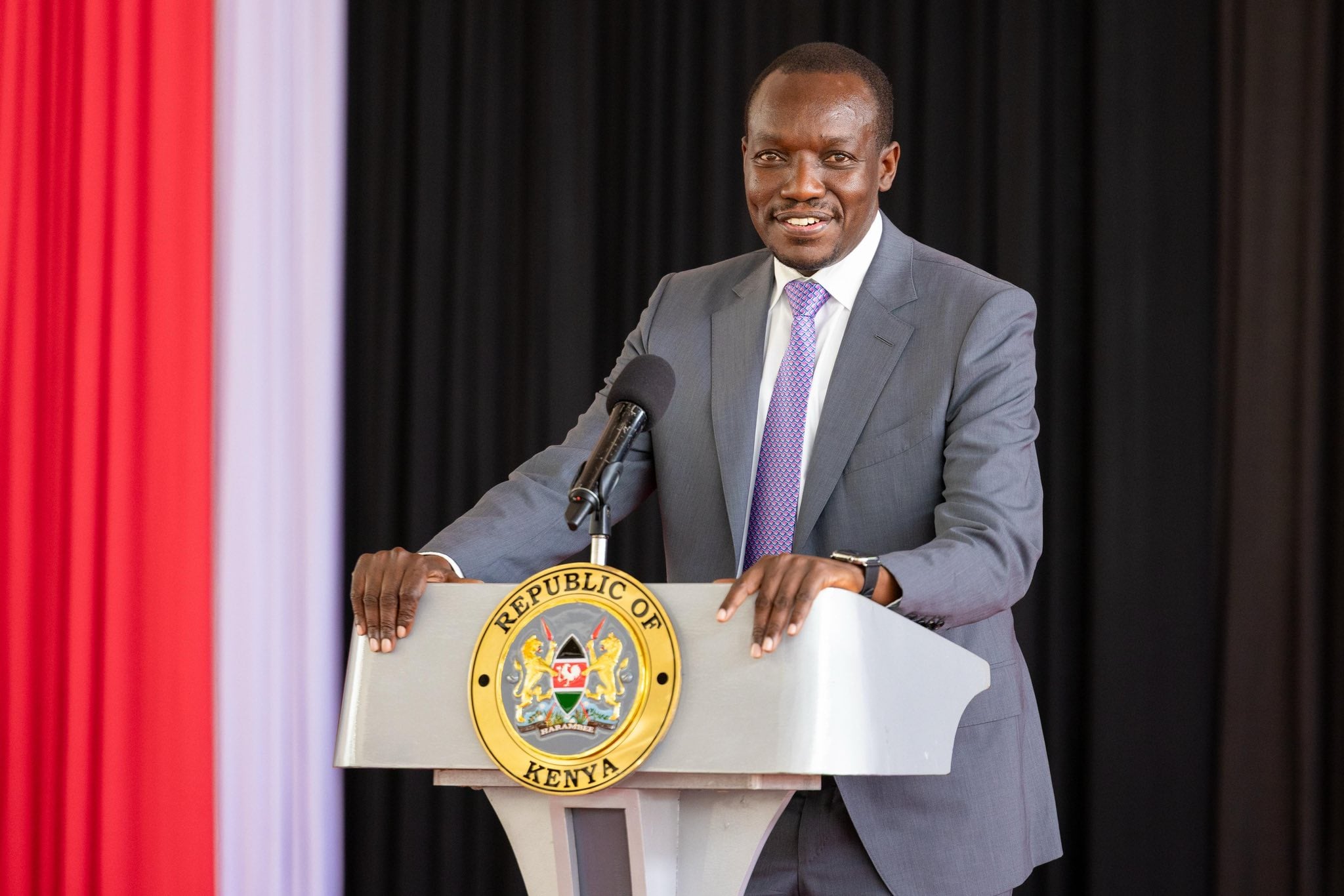
Kisii Governor Simba Arati is increasingly positioning himself at the centre of efforts to preserve the Orange Democratic Movement (ODM) following the death of its longtime leader Raila Odinga, as the party grapples with internal divisions, competing ambitions and an uncertain political relationship with President William Ruto’s administration. With Raila gone, ODM faces one of the most consequential moments in its history.
The party must contend with a leadership transition, disagreements over its engagement with the government and the emergence of competing political factions threatening to undermine its unity. Arati, however, appears determined to prevent the Orange movement from losing its political footing.
Read also Australia’s Labor suffers landslide defeat in Victoria state election
The Deputy Party Leader has stepped up his involvement in party mobilisation, recruitment and grassroots organisation, increasingly presenting himself as one of the figures seeking to keep ODM intact and preserve the political legacy left behind by Raila. His growing prominence comes at a time when the party is struggling to redefine its identity without the political figure who had anchored its organisation, electoral appeal and national influence for more than two decades.
Political analyst Dr Eric Onsongo says Arati’s emerging role could have implications extending beyond the party’s internal leadership contest. “For Arati, this is more than a party leadership question. It is also an opportunity to expand his political influence beyond Kisii County and establish himself as a national political player,” Onsongo told Kahawa Tungu.
But the governor’s undertaking is complicated by the competing forces within ODM, which are increasingly disagreeing over the party’s political direction, leadership and relationship with the ruling administration. A party divided over its political direction The emergence of the Linda Mwananchi movement, associated with Nairobi Senator Edwin Sifuna, has exposed deep divisions over ODM’s cooperation with President Ruto’s administration.
The faction has increasingly positioned itself against what it considers an unacceptable compromise of the party’s opposition identity, while the leadership aligned with party leader Oburu Oginga has favoured continued engagement with the government. The divisions have raised questions about ODM’s ability to maintain cohesion as it prepares for the 2027 General Election.
Onsongo says the disagreements extend beyond the question of whether ODM should cooperate with Ruto. “The disagreement is no longer merely about political strategy.
It touches on the party’s ideological direction, leadership succession, distribution of political power and the future of its traditional support base,” he says. Arati appears to have aligned himself with the camp defending ODM’s engagement with government, while insisting that the party must retain its independence and political bargaining power.
He has previously argued that ODM should not be reduced to a junior partner in any political arrangement, insisting that its electoral strength must translate into meaningful representation and influence. “We are in government as a partner on equal footing,” he told supporters at ATC grounds in Kisii on Monday.
The position reflects the delicate balancing act confronting ODM: maintaining access to government and the political benefits of cooperation without alienating supporters who believe the party should remain firmly in opposition. For Arati, the challenge will be convincing both sides that the party can pursue engagement without surrendering its political identity.
The recruitment drive and ODM’s national ambitions One of the most visible aspects of Arati’s emerging role has been his involvement in attracting politicians into ODM. The governor has increasingly become a prominent figure at events welcoming politicians from other political formations, reinforcing his position as one of the faces of the party’s recruitment and mobilisation campaign.
Among the high-profile entrants recently welcomed into ODM is Nairobi Governor Johnson Sakaja, who formally joined the party on November 2. Arati was at the forefront of Sakaja’s reception, an event that underscored the governor’s growing responsibilities in the party’s national mobilisation efforts.
In Kisii, Arati has also welcomed Dr Andrew Maubi and Charies Matoke, both formerly associated with UDA. Maubi is seeking to unseat Anthony Kibagendi in Kitutu Chache South, while Matoke is eyeing the Nyaribari Masaba seat currently held by Daniel Manduku.
Arati said he had been instructed by Oburu to receive Sakaja, whom he described as a political heavyweight. The recruitment drive is part of a broader attempt to reposition ODM as a national political force capable of attracting leaders beyond its traditional strongholds.
For a party whose electoral influence has historically been concentrated in particular regions, attracting governors, MPs and other influential politicians from rival formations could help rebuild its national appeal. But recruitment alone may not be sufficient to address the challenges confronting the party.
ODM will need to strengthen its internal democratic structures, establish a clearer political direction and accommodate competing interests if it is to avoid further fragmentation. The Matiang’i question and the battle for Gusii Arati’s political mission also has a regional dimension, particularly in the Gusii counties of Kisii and Nyamira, where ODM faces competition from UDA and other political formations.
The governor has been keen to consolidate the party’s influence in the region, but his ambitions intersect with those of former Interior Cabinet Secretary Fred Matiang’i, whose presidential ambitions have increasingly shaped Gusii politics. Arati has previously described Matiang’i as his political project and encouraged him to join his political formation, arguing that the Gusii community needs to consolidate its influence nationally.
However, Matiang’i’s ambitions present a complicated political equation for the governor. The former Cabinet Secretary commands considerable political interest in the region, and his eventual political alignment could significantly influence ODM’s fortunes in Kisii and Nyamira.
Arati must therefore navigate a delicate relationship with a powerful regional figure whose political ambitions may not necessarily align with the governor’s preferred strategy. The governor faces the additional challenge of managing competing ambitions among elected leaders, party officials and aspirants seeking various political positions in 2027.
His efforts to consolidate ODM’s influence could therefore be undermined if the party fails to accommodate the interests of influential regional players. Onyonka’s dissent exposes the limits of unity Arati’s efforts to build a united ODM front in Kisii have already encountered resistance.
Kisii Senator Richard Onyonka, who was elected on an ODM ticket alongside Arati in 2022, has increasingly associated himself with the Linda Mwananchi movement. The senator’s political positioning presents a challenge to the governor’s efforts to consolidate ODM’s influence in the region and rally its leaders behind a common strategy.
On November 24, Onyonka dismissed reports that he had entered into an agreement to support Arati’s re-election in 2027, describing the claims as misinformation and propaganda. He maintained that he had not entered into any political pact with the governor and would consult his constituents before deciding which seat to contest and which political alignment to pursue.
His remarks came as he accompanied Sifuna and other leaders on the Linda Mwananchi diaspora tour in the United States. The disagreement illustrates the difficulties Arati faces in building a cohesive political front even within ODM’s traditional strongholds.
While the governor has been actively recruiting politicians into the party, dissent among existing members could complicate efforts to present ODM as a united and credible national political force. The challenge is not merely to attract new political players but to persuade those already within the party to rally behind a common agenda.
Read also Can Kenya's rising political star turn popularity into a presidential bid?
Can Arati inherit Raila’s political mantle? Raila Odinga built ODM into one of Kenya’s most formidable political movements through decades of political mobilisation, grassroots organisation, political alliances and an ability to accommodate leaders with competing interests.
His influence extended far beyond the party leadership position. He provided a political identity that millions of supporters associated with the Orange movement.
That is the political inheritance confronting Arati and other senior ODM leaders. The governor’s growing national visibility, recruitment networks and experience in grassroots mobilisation could position him as an influential figure in shaping the party’s future.
But preserving Raila’s political legacy will require more than expanding the party’s membership or defending its participation in government. ODM must find a way to reconcile the competing factions, restore confidence among its supporters and articulate a political programme capable of sustaining its relevance beyond Raila’s leadership.
The party must also confront the difficult question of whether its cooperation with Ruto represents a strategic opportunity or threatens to erode the independent political identity that has defined ODM for years. The answers will shape not only the party’s future but also the political fortunes of those seeking to emerge as its next generation of leaders.
The ultimate political test For Arati, the stakes extend beyond the survival of ODM. A revitalised Orange movement could strengthen his national standing, consolidate his influence in Gusii and position him among the politicians shaping Kenya’s post-Raila political order.
But failure to unite the party could expose the limits of his national ambitions. The governor must demonstrate that he can transcend the politics of recruitment and regional consolidation to become a consensus-builder capable of managing competing interests within a politically divided party.
He must also convince ODM supporters that the party can remain politically relevant without compromising the identity and principles that defined its relationship with Raila. Arati appears determined to keep the Orange flame burning.
Yet Raila’s political shoes are exceptionally difficult to fill, and no single politician can realistically inherit his entire political constituency. The governor may be fighting a lonely battle to rescue Raila’s political legacy, but the ultimate responsibility for preserving ODM rests with the entire party leadership.
Whether his efforts produce a stronger, united Orange movement or are overwhelmed by internal rivalries and competing ambitions remains one of the defining questions facing ODM ahead of the 2027 General Election. The post Arati’s lonely battle to rescue Raila’s political legacy appeared first on Kahawatungu .
This report was written and published by Kahawa Tungu, not by the Kenya Business News newsroom. It is republished here in full with credit to the publisher, and the headline remains the copyright of Kahawa Tungu. Read our attribution policy. Photographs are the publisher's and are credited above. Last updated 25 November 2026.
The opposition Liberal-National coalition wins at least 49 seats in the 88-member lower house in a Labor stronghold.
The 44-year-old politician has gained a youthful following for his fierce criticism of President William Ruto.
Betway backer Martin Moshal gave R54.5 million to six South African parties, including the DA and ActionSA, in the three months to September.