PoliticsWire
Australia’s Labor suffers landslide defeat in Victoria state election
The opposition Liberal-National coalition wins at least 49 seats in the 88-member lower house in a Labor stronghold.
Nairobi, Kenya
Behind the growing number of reported cases of gender-based violence (GBV) in Kisii County lies a disturbing social crisis threatening the safety, dignity and livelihoods of women and girls. For many survivors, home has ceased to be a sanc…
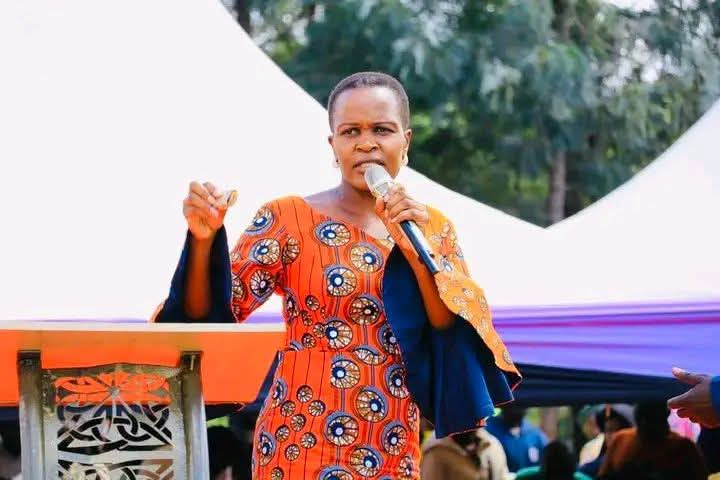
Behind the growing number of reported cases of gender-based violence (GBV) in Kisii County lies a disturbing social crisis threatening the safety, dignity and livelihoods of women and girls. For many survivors, home has ceased to be a sanctuary, becoming instead a place of fear, humiliation and physical abuse.
Some incidents leave victims with lasting physical injuries and psychological trauma. The crisis has increasingly drawn the attention of government agencies, healthcare professionals, human rights defenders and civil society organisations, amid concerns over domestic violence, sexual assault, defilement, harmful cultural practices and violence against women and girls.
Read also Australia’s Labor suffers landslide defeat in Victoria state election
During a public participation forum held in Kisii in May 2025 by the Presidential Taskforce on the Review of the Legal and Policy Framework on Gender-Based Violence, concerns were raised over the prevalence of the vice and the need to address its underlying social and economic causes. Kisii County Gender Director Winnie Ng’eno raised concerns about the scale of reported cases, while taskforce member James Nombi identified property disputes, economic inequalities and power imbalances between men and women as some of the factors fuelling violence.
The scale of the problem is also reflected in statistics from Kisii Teaching and Referral Hospital, where Dr Oimeke Marita disclosed that sexual and gender-based violence cases handled at the facility increased from 163 in the 2022/2023 financial year to 263 in 2023/2024 and 281 in 2024/2025. These figures point to an increasing burden on healthcare providers and underscore the need for stronger prevention, reporting and survivor-support mechanisms. The figures have reinforced calls for stronger prevention measures, improved reporting systems and more accessible support services for survivors.
Civil society organisations, including the Centre for Community Mobilization and Empowerment (CECOME) and Manga Health Education Africa Resource Team (Manga HEART), have also been involved in grassroots campaigns against GBV and harmful practices, particularly female genital mutilation and intimate partner violence. Despite these interventions, survivors continue to face numerous obstacles, including stigma, economic dependence on perpetrators, inadequate safe accommodation and difficulties reporting abuse.
It is against this backdrop that Kisii County Woman Representative aspirant Rosslyn Nyakona is seeking to make the fight against gender-based violence a central pillar of her political agenda, arguing that the crisis demands more than public condemnation and occasional awareness campaigns. Appalled by what she describes as the alarming prevalence of violence against women, Nyakona says her bid for the Woman Representative seat is partly driven by the desire to give vulnerable women a stronger voice and transform the office into an effective instrument of protection, advocacy and empowerment.
“Every time I hear of a woman being abused, assaulted or killed, I ask myself whether we are doing enough as a society to protect our mothers, sisters and daughters. We cannot continue normalising suffering among women and then pretend that everything is well,” she told journalists during a breakfast meeting in Kisii on Sunday.
Nyakona argues that the Woman Representative’s office offers an important platform to push for stronger interventions, mobilise resources and hold institutions responsible for protecting survivors accountable. “A woman who has been abused should know where to turn, whom to call and where she can find immediate assistance,” she said.
Of particular concern to the aspirant is Bonchari Constituency, which she says is among the worst-affected areas, reportedly recording hundreds of GBV cases annually. She argues that the reported figures should alarm political leaders, security agencies, community organisations and families, calling for investigations into the underlying causes and the effectiveness of existing interventions.
“When an area is reportedly recording hundreds of cases every year, we cannot continue treating these incidents as isolated family disagreements. We must ask ourselves why this is happening, why victims are suffering in silence and what concrete measures are being taken to protect them,” she said.
Nyakona observes that many survivors remain trapped in abusive relationships because of financial dependence, fear of retaliation, social stigma and pressure to preserve marriages. For some women, reporting an abusive partner could mean losing their only source of livelihood and the means to support their children.
Others fear rejection by their families or being blamed for the violence they have endured. “One of the biggest injustices we commit against survivors is asking them to remain silent for the sake of marriage or family reputation.
No woman should be forced to choose between her safety and keeping a relationship. Violence should never be defended in the name of preserving a family,” she said.
She is proposing a comprehensive intervention combining prevention, protection, prosecution and rehabilitation. Her proposals include strengthening rescue centres, expanding access to counselling and legal assistance, and establishing closer working relationships among police officers, healthcare providers, religious institutions and community organisations.
She also wants sustained public awareness campaigns to challenge cultural attitudes that normalise violence or discourage survivors from reporting abuse. Rescue centre controversy Nyakona has also taken issue with outgoing Kisii Woman Representative Dorice Donya Aburi over the use of the Gender Rescue Centre in Daraja Moja, Kisii, as an office, arguing that the arrangement is inappropriate at a time when the county continues to grapple with gender-based violence.
She maintains that a facility established to offer refuge, protection and support to vulnerable women should not be used as an administrative workspace while survivors struggle to find safe accommodation. “It is wrong for the Gender Rescue Centre to be used as an office when women and girls are desperately in need of protection.
What was the purpose of establishing such a facility if those facing violence cannot access it when they need help?” she posed. Nyakona wants the centre restored to its intended purpose and equipped to provide emergency accommodation, counselling, psychosocial support and assistance to survivors seeking justice.
“At a time when we are witnessing alarming cases of gender-based violence, every facility established to protect women must be available and functional. We cannot talk about empowering women while facilities meant to rescue them are being used for other purposes,” she said.
Her criticism raises broader questions about the management of public investments intended to safeguard women and whether facilities established for that purpose are delivering the services for which they were created. An emerging political contest Nyakona’s campaign is unfolding against the backdrop of an emerging contest for the Kisii Woman Representative seat, with nominated Senator Essy Okenyuri also expected to vie for the position in the 2027 General Election.
Read also Can Kenya's rising political star turn popularity into a presidential bid?
The contest is likely to bring competing approaches to women’s representation, economic empowerment and protection against gender-based violence into sharper focus. Meanwhile, Donya Toto has shifted her political ambitions and is setting her sights on the Bonchari parliamentary seat, adding another dimension to the county’s changing political landscape.
For Nyakona, however, the immediate concern is transforming the gender agenda from political rhetoric into practical interventions. “I do not want to be elected simply to occupy an office.
I want to use the position to make a difference in the lives of women. Representation must have a human face.
When a woman is in danger, she should be able to count on her leaders and institutions,” she said. She argues that the fight against GBV should be measured not by the number of speeches made by leaders but by the number of survivors rescued, cases successfully prosecuted and families protected from violence.
As the 2027 political contest gathers momentum, Nyakona is placing the protection of women and girls at the centre of her political agenda. Ultimately, however, the responsibility cannot rest on one elective office.
Combating GBV requires cooperation between the national and county governments, law enforcement agencies, healthcare professionals, families and communities. For Kisii, the real test will be whether political commitments translate into safer homes, functional rescue facilities, accessible support services and justice for survivors.
Nyakona believes the Woman Representative’s office could provide the political leverage needed to advance that cause. Whether her proposals can translate into tangible change remains a question that voters and the women she hopes to represent will be watching closely. The post Nyakona seeks Woman Rep seat on a promise to confront Kisii’s GBV crisis appeared first on Kahawatungu .
This report was written and published by Kahawa Tungu, not by the Kenya Business News newsroom. It is republished here in full with credit to the publisher, and the headline remains the copyright of Kahawa Tungu. Read our attribution policy. Photographs are the publisher's and are credited above. Last updated 26 November 2026.
The opposition Liberal-National coalition wins at least 49 seats in the 88-member lower house in a Labor stronghold.
The 44-year-old politician has gained a youthful following for his fierce criticism of President William Ruto.
Betway backer Martin Moshal gave R54.5 million to six South African parties, including the DA and ActionSA, in the three months to September.